Play Nine Men's Morris, a fun Strategy game you can enjoy instantly in your browser. No Download, Free to Play, and playable on PC, mobile, and tablet.
Genre: Strategy | No Download | Free to Play
This is one of those classic board games where every small decision matters. The goal is simple to explain but hard to master: place and move your pieces to build strong lines, limit your opponent’s options, and create a winning position that they cannot recover from.
What makes it stand out is how the match changes over time. Early turns are about good placement and planning ahead, while the middle and late game reward careful movement, smart trades, and knowing when to defend instead of chasing an attack.
Even if you are new to abstract strategy games, it feels welcoming because the rules are consistent. There is no luck system and no hidden information, so improving comes from learning patterns, recognizing threats, and staying calm when the board gets tight.
Players enjoy it because it mixes clean rules with deep strategy. You are always balancing two jobs at once: building your own best structure while also breaking the opponent’s plan before it becomes dangerous.
It is also great for short sessions. A single match gives you enough time to set up ideas, test a plan, and then either convert it into a win or learn exactly what went wrong.
Another reason it stays popular is the satisfying momentum shifts. One strong sequence can flip the board, but only if you prepared the position earlier. That feeling of earning a comeback through good decisions is a big part of the appeal.
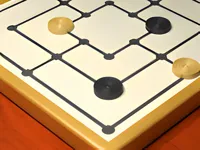
Start a match and look at the empty board as a map of future movement. Your first job is placement: drop your pieces on open points and try to build threats that can become clean lines later without leaving easy counters.
After placement, you will switch into movement. Pieces slide along connected lines, so it helps to think in terms of lanes and intersections. Control the center connections when you can, because those points often decide which side can rotate faster and which side gets stuck.
If you are playing with a friend, it can be a nice fit for 2-player sessions. If you are practicing alone, treat each match like a puzzle: note what positions caused you trouble and repeat the ideas until they feel natural.
The core loop has three phases. First, you place pieces one by one on empty points. When you create a straight line of three of your own pieces, you usually earn the right to remove one opponent piece, which changes the balance of the board and makes spacing and timing extremely important.
Once all pieces are placed, you move them along the board’s connections. This phase is about mobility. If you can keep multiple threats alive at once, the opponent will be forced to respond, and that often leads to positions where they cannot protect everything. At the same time, you must avoid moving into a trap that allows an immediate line and a free removal against you.
Late game tends to be sharper. When a side has fewer pieces, every move carries more weight, and blocking becomes a real win condition. Many games end not because of a big attack, but because one player can no longer make a legal move and gets locked out of the board.
For new players, the learning curve usually comes from understanding tempo. If you chase a line too early, you might give away a key connection. If you defend too much, you may fall behind in activity and never regain space. The best games feel like a steady tug-of-war where you are constantly reading the next two or three turns.
The most special part is the way a single point can matter for the entire match. Taking a key intersection early can decide who gets freedom of movement later, and that means your first few placements are not just “put a piece anywhere.” You are shaping the lanes your pieces will use when the board becomes crowded.
It also has a nice mix of attack and defense. You are not only trying to create lines, you are trying to create threats that the opponent cannot answer cleanly. When you learn to set up a threat that also defends your weak spots, you start to feel the real depth of the game.
Think of the opening as building a safe structure. Do not rush to make an early line if it costs you an important connection, because that can leave you slow and cramped during movement. Instead, aim for flexible placements that can become threats in multiple directions.
Try to keep your pieces connected to the board’s busiest routes. When you can rotate quickly, you can respond to threats without breaking your own plan. Mobility also helps you avoid being forced into predictable moves.
Common mistakes usually come from tunnel vision. Many beginners chase the next line and forget that the opponent’s best response might be to block movement, not to block the line directly. When you feel stuck, take a breath and look for a move that improves your future options, even if it does not create an immediate threat.
If you want extra practice with thinking patterns, it can help to explore other puzzle style games on the site. The mindset is similar: you learn to spot threats, plan sequences, and avoid moves that look good but collapse after one reply.
If Nine Men's Morris is not working properly, try this:
If you like thoughtful turns, clean rules, and reading the board a few moves ahead, these games match that same pace and decision-making style.
Yes. You can play it right in your browser, and it works well on most modern desktops and laptops. For the smoothest experience, keep only a few tabs open and use an updated browser.
It is a classic abstract strategy game where you place and move pieces on a board to form straight lines of three and gradually reduce the opponent’s ability to respond. Strong play is about planning, mobility, and preventing traps.
Open the game, begin a new match, and start by placing pieces on empty points. Focus on building a flexible shape instead of rushing a single idea, then switch to sliding your pieces once placement ends.
Yes, Nine Men's Morris is free to play online.
Start by learning two habits: protect your key connections and always check what your move allows on the next turn. Playing calmly is important, since many wins come from slowly limiting the opponent’s movement rather than forcing a quick finish.
You can play it on NiaGames. If you enjoy brainy matches with friends or family, browsing more family friendly titles can also be a good way to find similar low-pressure games.
No. It runs in your browser, so you can start instantly without installing files. That also makes it easy to play quick rounds when you have a few minutes.
Yes. Touch controls are straightforward, and it is a good fit for casual play. If you are on a slower connection, try switching to a stable network so the match stays responsive, especially if you prefer casual sessions on the go.