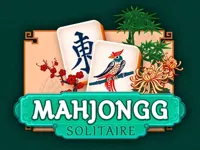
Play Mahjongg Solitaire, a fun tile-matching puzzle game you can enjoy instantly in your browser. No Download, Free to Play, and playable on PC, mobile, and tablet.
Genre: tile-matching puzzle | No Download | Free to Play
Mahjong solitaire is a calm, focused way to spend a few minutes, built around one satisfying idea: clear the board by matching open tiles. Unlike traditional table mahjong, you are not playing against other people. It is you versus the layout, your planning, and the way you manage the remaining options.
This kind of game is popular because it is easy to start and still feels rewarding when you improve. One round can be quick, but the best runs come from slowing down, scanning the board, and thinking two or three moves ahead. If you enjoy this style, browsing the Mahjong tag is a simple way to find more tile-based picks.
It hits a nice balance between relaxed play and real problem-solving. You are not reacting to fast timers or tricky controls, so it is great when you want a more steady pace. At the same time, the board can punish random clicking, which makes smart planning feel meaningful.
Players also like how readable the challenge is. You can usually tell why a run went wrong: you used an important tile too early, you opened the wrong side, or you left yourself with blocked matches. That clear feedback is why the game fits well in the Puzzle space, especially for people who want a quieter brain workout.
Your goal is to remove every tile by selecting matching pairs. A pair can only be removed if both tiles are “free,” meaning they are not covered by another tile and have at least one open side (left or right). When you clear a pair, you reveal more tiles underneath and create new options.
Instead of rushing, play like you are opening pathways. Look for matches that expose hidden layers or free up stacked areas, and avoid burning rare tiles that might be needed later. If you like games where careful choices matter more than speed, you might also enjoy slower, deliberate picks under the Relaxation tag.
Most boards start with many tempting matches, but the real puzzle is choosing which match to take first. Two tiles can match in more than one place, so every removal is a small commitment that shapes what will be available later. Strong runs come from checking the layers, noticing which suits or symbols appear only a few times, and keeping your future pairings safe.
The objective is simple: clear the full layout. The difficulty curve comes from the structure of the stack, not from faster action. Early moves are about unlocking key areas, mid-game is about keeping your options wide, and late-game is where “tile scarcity” shows up. If you used a critical tile too casually, you can end up with a stranded piece that has no partner left on the board.
A useful habit is to treat the layout like sections. Focus on freeing corners and outer edges first, because those tiles often block entire rows. Then try to open the top layers that are holding down the center. When you start seeing the board in zones, you rely less on memory and more on repeatable patterns, which is one reason this style overlaps with Memory games for some players.
Tile solitaire works because it feels fair. When you lose, it usually traces back to a choice you can learn from, like spending a rare tile too early or ignoring a blocked lane that needed attention. That makes the improvement curve feel personal instead of random.
It is also a clean alternative to more complicated board games. You get the cozy “tabletop” mood without needing a long setup or rules to memorize, which is why many players group it with Board and Casual sessions on days when they want something simple but satisfying.
Start by scanning for tiles that have multiple possible partners. If a tile can match in two different places, remove the pair that frees up the most blocked pieces. This keeps your future routes open and prevents the board from narrowing too early.
Try to avoid clearing only one side of the layout. If you strip the left edge while the right edge stays locked, you can end up with free tiles that look playable but do not actually help you open new layers. A balanced approach usually creates more “fresh” matches as the board unfolds.
Pay special attention to tiles that appear less often in the visible layers. When you notice a symbol or suit that seems rare, treat it carefully and do not remove it unless you are sure its partner will remain accessible. This is one of the simplest ways to prevent endgame dead-ends.
When you want a different kind of puzzle break, switching to something like 15 Puzzle can refresh your focus while keeping the same thoughtful pace.
If Mahjongg Solitaire is not working properly, try this:
These picks are similar because they focus on clearing patterns step by step, with short rounds and careful choices instead of fast reactions.
Yes. You can play it for free in a browser on NiaGames, and it runs like a classic tile solitaire session with quick restarts.
It is a tile-matching puzzle where you clear a stacked layout by removing pairs of identical tiles that are not blocked on the sides or covered from above.
Open the game, look for two identical free tiles, and tap or click to remove them. Keep removing pairs while trying to open new layers and avoid trapping a tile without its partner.
Yes, Mahjongg Solitaire is free to play online.
Focus on moves that open hidden tiles rather than moves that only remove easy pairs. If you are stuck, re-scan the edges and corners, since freeing those areas often reveals the next useful match. If you enjoy this style, the Solitaire tag has other calm, step-by-step games too.
You can play it on NiaGames in your browser. For a different but still card-and-table vibe, you can also try Spider Solitaire for another classic that rewards planning.
No. It runs in your browser, so you can start right away without installing anything.
Yes. It works on mobile and tablet with touch controls, so you can tap tiles to remove matching pairs and use the on-screen menu for settings.